BCN 2025 Year-End Review and Plans for 2026
Thank you for your interest in and support of the Bird Conservation Network this last year. In 2025, our all-volunteer coalition wrapped up another year of accomplishment as we made key investments to strengthen our organization and the ways in which we support birds in greater Chicagoland. We could not have done this without the support of our coalition members, volunteers, and generous donors! THANK YOU!
2025 Highlights
We are pleased to report that we honored our 2025 plan and worked hard to advance the goals laid out one year ago.
- Transitioned BCN's massive dataset of almost 290,000 records of breeding bird data to a platform called Nature Counts, making our BCN Survey data more accessible for land managers across the Chicago region and researchers across the continent. In addition, we developed a data visualization capability using a tool called Tableau that will allow users to more easily view site- and species-level data, trends over time, and similar analyses. Together, these capabilities empower land managers to understand the impact of stewardship decisions on birds using their habitats, inform research, and provide trending analyses.
- Completed another successful monitoring season reporting 140 breeding bird species across just under 1,100 points in seven counties, which included DeKalb County for the first time. To improve our management of the survey process, we revised the monitor application process and expanded protocol detail based on input from our Area Coordinators, standardized guidelines for monitor communications, and selected a volunteer management software solution for 2026 implementation. We also managed a smooth transition to new eBird Projects functionality.
- Advocated for environmental issues that impact birds including support for conservation legislation. In 2025 we celebrated additional successes in Lake County regarding bird-friendly building design and shared Chicago Bird Collision Monitors’ report on avian flu, while supporting a host of environmental legislation:
- Wetland protection provisions in SB3669
- Improving Pesticide and Herbicide Regulations - HB 1645 (Mussman) & HB 1596 (Faver Dias)
- Soil and Water Conservation Districts Funding - SB 1689 (Koehler)
- Chicago City Council hearing on bird collisions
- Farm Bill protecting important programs like the Conservation Reserve Program
- USDA reorganization and its impact on programs and its lack of transparency
- Opposition to registration of the herbicide Dicamba for surface spraying on crops due to its impact on 27 species of birds
- Support for Research for Environmental Uses and Sustainable Economies (REUSE) Act of 2025 and bipartisan legislation directing EPA to conduct a feasibility study on reuse and refill systems in different sectors
- Championed birds through sustained visibility throughout the Chicago region. We sponsored regional events including the Gull Frolic winter birding event, the Urban Birding Festival, Earth Awareness Fair in Frankfort, and the Warrenville Arbor Day Celebration. Our quarterly newsletter shared BCN and regional birding news with an audience that now exceeds 700 subscribers. In March, Eric Secker and Bob Fisher championed Chicago as an important migratory bird stopover at Wild Things. Also during the year, Illinois Audubon Magazine featured a byline by Eric Secker titled “Bird Conservation Network: A Citizen Science Coalition.” And with the help of volunteer Pat Andersen, we now have a presence in the growing local Discord community. Through these activities, we advocate, we educate, and we share our passion for protecting birds and the habitats they need to survive.
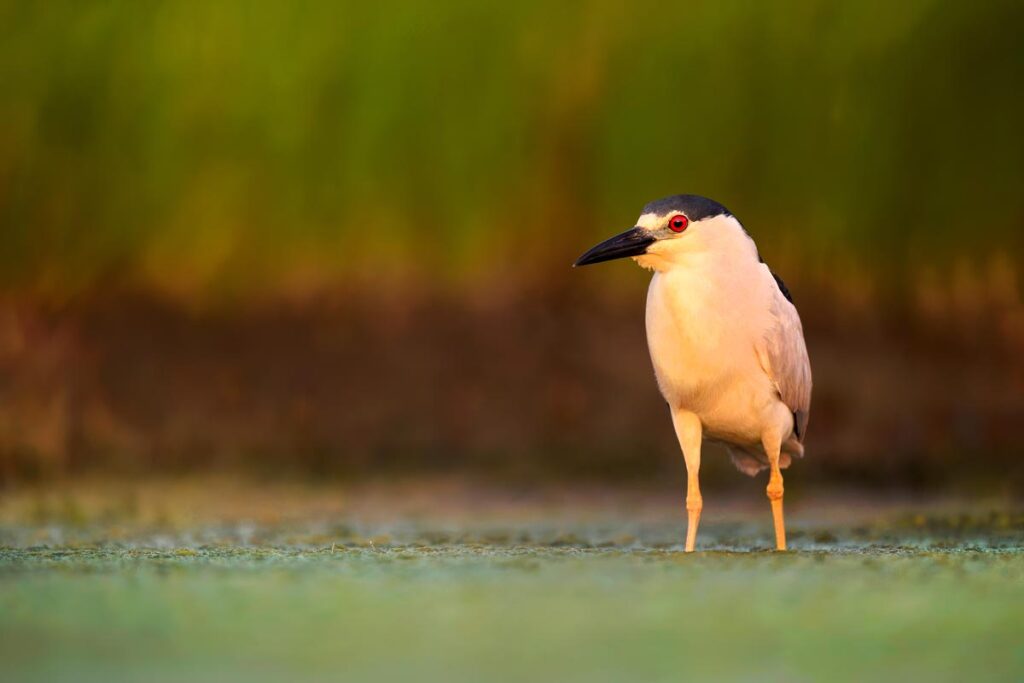
- Supported two ongoing research initiatives. The first is the Chicago Black-crowned Night Heron Project, which is working with a team of scientists to study the largest known colony of these state-endangered birds right here in Chicago and track their migratory movements, as well as raise public awareness. The second is a Grassland Research project surveying Cook County grassland birds to learn more about why these
birds are declining in some grasslands but not others. A draft report is now in the review cycle. Both projects are ongoing.
Plans for 2026
- Introduce our improved data access and analysis capabilities to our land managers, researchers, and partners. Our top priority in 2026 is the rollout of our Nature Counts platform and Tableau visualization tool to the land managers who can now easily access this data and use it as they make land management decisions. This is a time-intensive process requiring follow-up to promote usage and acceptance, but it is the most important initiative on our agenda. Eric Secker leads this initiative.
- Continue to enhance data access and analysis capabilities based on feedback from users. Our baseline product will benefit from enhancements based on what we hear from our land managers and researchers. Capturing and defining those needs will be Eric Secker and volunteer Jim Green. We also intend to raise the funding to continually evolve what we have to be more valuable to the people using it, a separate workstream.
- Continue to strengthen the monitor recruitment and onboarding process. Managing a dynamic corps of 200+ volunteers across seven counties and ensuring proper onboarding, protocol adherence, and reporting is a big job. The acquisition of a volunteer management tool called Volgistics is a step forward as it will help us organize and automate tracking of volunteer activity. Energy will also focus on improved monitor
screening, onboarding, and communications. Aubrey Sirman leads this initiative with co-leader Tim Balassie. - Complete and share the Grassland Research paper. This research paper drafted by Mary Bernat and based on research conducted by a team of volunteers will be shared with land managers, researchers, media, and other interested parties. It is now in the hands of the science advisors Jim Giocomo, Jim Herkert, and Aubrey Sirman to determine next steps.
- Continue our close monitoring and support of advocacy issues. We will continue to voice the support of the coalition in legislative matters (both regional and national) that impact birds and advocate on local issues where our voice has influence. Bob Fisher and Donnie Dann lead this initiative.
- Build stronger relationships with our coalition members. A core strength for BCN is the reach and influence we have through our 20 coalition members. When we speak, they speak, and there is strength in numbers. In 2026 we will make a greater effort to interact with our coalition member leadership teams and their members. We will engage our Representatives who represent their organizations but also engage in personal outreach to get to know these organizations on a personal level. Diann Bilderback leads this initiative.
- Raise sufficient funds to manage ongoing BCN investment priorities, which include data access and analysis capabilities and administrative support. Initiatives such as enhancements to our data access and analysis capabilities, working with land managers, and acquiring tools to help us work more efficiently require funding well beyond our coalition dues. In 2026 we will roll out a new category of BCN affiliation called “Member.” It is a simple membership affiliation that can provide a source of funding. Our continued evolution also requires access to external funding through grants and foundations. Diann Bilderback leads this initiative along with the support of the Executive Committee.
Include the Bird Conservation Network in your donation program and make a difference for birds!
Please consider a donation to the Bird Conservation Network in your giving program. We have something special here, a coalition that represents 20 regional conservation organizations, a massive regional dataset of breeding bird data, and an impassioned volunteer corps that is a model for community science programs. Help us carry out our ambitious agenda to protect the birds we love and the habitats they need to survive. Donate today at www.bcnbirds.org/donate. If you would like to send a check or donate another way, contact treasurer@bcnbirds.org. Thank you for being a friend to BCN.